
Textile Testing Labs: A Guide for Manufacturers
Textile testing labs provide a critical step for manufacturers to ensure compliance. It ensures that textiles meet quality standards, are safe for consumers, and comply with relevant standards and regulations across different geographies. With the global textile market expected to reach $1.4 trillion by 2030, the demand for consistency and compliance has never been greater.
This article covers the key services provided by textile testing labs, including the role testing plays in quality and compliance, key textile testing types, and how to choose the right tests for your products and markets.
What are Textile Testing Labs?
Textile testing labs scientifically evaluate a fabric’s strength, composition, safety, and performance using standardized methodologies. Testing is typically performed using equipment such as tensile testers, spectrophotometers, and flammability chambers.
Textile testing plays a critical role in ensuring products meet internal quality expectations while also complying with mandatory safety and regulatory standards. Performance and durability tests validate attributes such as strength, colorfastness, and shrinkage, helping brands deliver textiles that hold up under real-world use. Compliance-driven testing goes further by verifying that materials meet chemical, labeling, and flammability requirements in global markets.
Why Manufacturers Use Textile Testing
Validate product quality - verify durability and workmanship standards.
Ensure consumer safety - detect harmful dyes, allergens, and toxic chemicals.
Comply with global regulations - required for markets such as the EU, U.S., and Canada.
Choosing the Right Tests
Selecting the correct tests depends on the product, market, and brand’s in-house protocols. One study found that 32% of textile testing failures were attributed to colorfastness issues, which illustrates the importance of textile testing to ensure product compliance. Many manufacturers work with third-party textile labs to define a customized test plan that aligns with production timelines and regulatory requirements.
Key Factors to Consider:
| Factor | Why It Matters |
|---|---|
| Intended use | Different apparel types (e.g., children’s apparel, upholstery, etc.) require different standards |
| Target market | Regulations differ across the U.S., EU, Middle East, and Asia |
| Material type | Natural fibers, synthetics, and coated fabrics require different test methods |
| Compliance requirements | Required for labeling, chemical safety, or flammability laws |
Example:
As a manufacturer producing high-performance athletic apparel, you would prioritize a “colorfastness to perspiration” test over standard wash fastness, because sweat contains salts and acids that can cause dyes to bleed, stain skin, and degrade fabric during active use. These are risks that may not appear under normal washing conditions.
By selecting a test that aligns with real-world product use rather than a generic durability measure, brands ensure performance claims hold up under the conditions customers actually experience.
Types of Textile Testing
Textile testing spans three primary categories: physical, chemical, and performance testing. Testing requirements for manufacturers differ based on the type of fabric, how it is used, and where it will be sold. This quality assessment process is an essential part of the manufacturing life cycle, as it helps ensure that materials meet consumers' expectations and comply with relevant regulations.
Physical Textile Testing
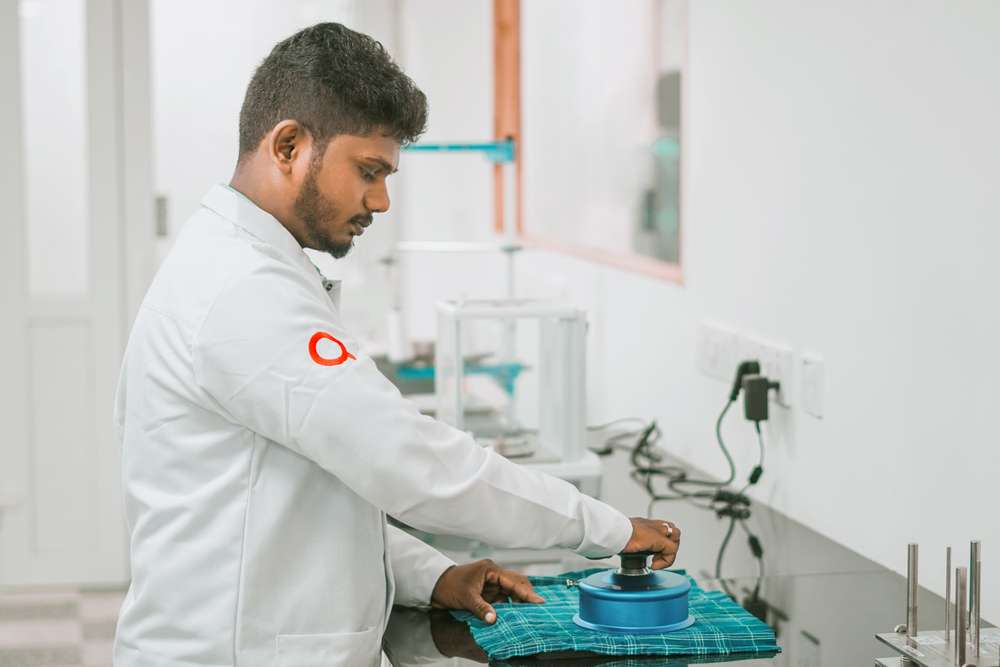
These tests evaluate key characteristics such as yield strength, tensile strength, and elongation. These factors directly impact a product’s durability, safety, and performance. This makes physical testing essential for confirming that textiles can withstand real-world use conditions, meet regulatory safety requirements, and maintain performance throughout the product’s lifecycle.
Key Physical Labs Tests:
Tearing & Seam Strength: Tests fabric and seam durability to ensure garments can withstand regular use without tearing.
Shrinkage: Evaluates how much a thread contracts when exposed to high temperatures during machine stitching to prevent seam puckering, fabric distortion, and dimensional instability after production.
Thread Friction: Measures the resistance a thread encounters as it passes through sewing machine components and fabric, ensuring smooth sewability while minimizing thread breakage, heat buildup, and machine wear.
Uniformity: Assesses the consistency of thread diameter, mass, and structure along its entire length to maintain stable tension, consistent stitch appearance, and uniform seam strength.
Tensile Strength and Elongation: Measures the maximum force a thread can withstand before breaking and how much it stretches prior to rupture, ensuring seams can endure both sewing stresses and in-use garment loading without failure.
Thread Count: Verifies the number of stitches per unit length in completed seams to confirm compliance with approved construction specifications and prevent material or labor shortcutting.
Chemical Textile Testing
Chemical tests analyze the chemical makeup of textiles, including the types and concentrations of substances such as dyes, finishes, and potential contaminants. These tests are essential to ensure consumer safety and verify compliance with relevant regulatory standards.
Common chemical tests include, but are not limited to:
Dye Analysis: Identifies the types and concentrations of dyes used in textile materials to assess safety and compliance.
Azo Dye Testing: Detects the presence of restricted azo dyes, which may release aromatic amines linked to mutagenic and carcinogenic effects.
Pentachlorophenol (PCP) Testing: Screens for pentachlorophenol, a hazardous chemical harmful to both human and animal health.
Polycyclic Aromatic Hydrocarbons (PAH) Testing: Evaluates textile materials for polycyclic aromatic hydrocarbons, which are known environmental pollutants and potential carcinogens.
Performance Textile Testing
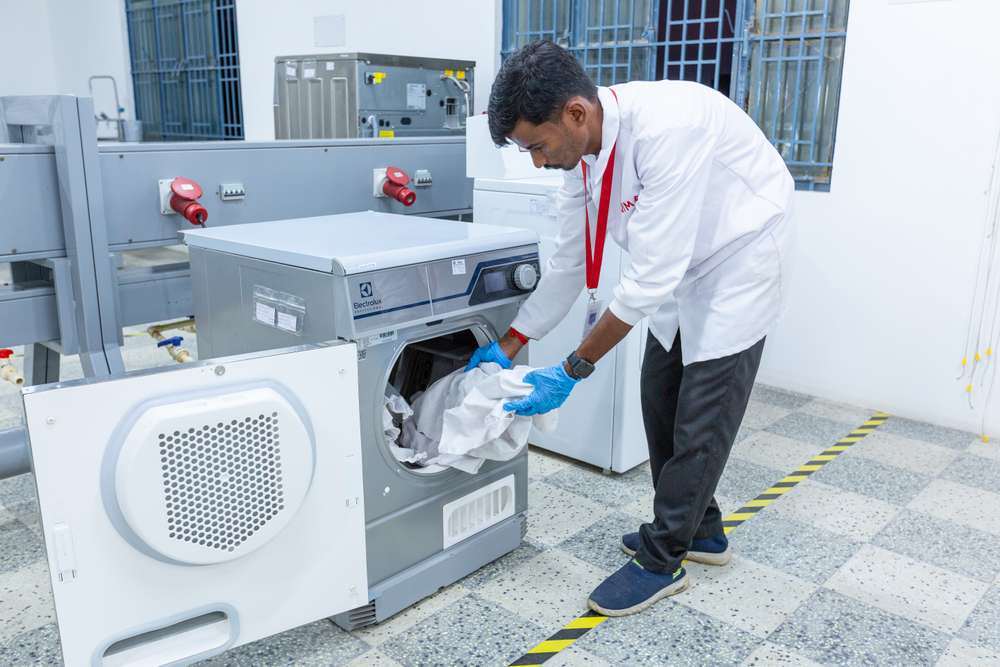
Performance tests measure the performance of textiles, such as their ability to resist fading, shrinking, and pilling. These tests are essential for ensuring that materials meet the expectations of consumers, such as durability and functionality.
Performance testing includes the assessment of:
Colorfastness: This test measures how well a textile resists fading when exposed to light, water, or other chemicals. This is important for ensuring that fabrics retain color over time and do not fade after washing or dry cleaning.
Dimensional Stability: Assesses a fabric’s ability to retain shape and size after washing, stretching, or wear.
Weather Resistance: Measures fabric performance against water, wind, and cold to validate claims like waterproofing or thermal insulation.
Thermal & Water Vapor Resistance: Evaluates breathability and moisture regulation, key for activewear and outdoor apparel.
Penetration Resistance: Determines resistance to liquid penetration, critical for protective garments exposed to hazardous substances.
While testing for all the relevant performance characteristics that pertain to your materials are important, there are common failures that align with particular product types.
Below is a list of common failures associated with specific product types:
| Failure Type | Visible Issue | Typical Products | Underlying Cause |
|---|---|---|---|
| Colorfastness | Fading, bleeding | Sportswear, denim, swimwear | Poor dye fixation |
| Shrinkage | Fit distortion | Cotton knits, viscose | Manufacturing tension |
| Pilling | Surface fuzz | Knitwear, fleece | Loose fibers, abrasion |
| Abrasion | Holes, thinning | Workwear, upholstery | Low structural durability |
| Seam Strength | Split seams | Stretch garments | Sewing or thread mismatch |
| Stretch Recovery | Bagging out | Activewear, leggings | Weak elastane, poor heat setting |
Textile Lab Tests for Safety and Compliance
While many tests help brands meet internal quality standards, compliance-related testing goes a step further to ensure materials meet legally mandated safety requirements in the markets where products are sold. In-house testing can validate product expectations, but only accredited compliance testing can verify regulatory alignment, prevent customs issues, and reduce the risk of recalls, fines, and market-entry barriers.
Examples of these tests include, but are not limited to:
APEO testing: Detects surfactants that break down into toxic compounds linked to environmental harm and potential human health risks, ensuring levels remain within safe limits.
Formaldehyde testing: Identifies carcinogenic formaldehyde used in wrinkle-resistant and dye-fixing finishes, ensuring levels meet global safety requirements.
PFAS testing: Detects per- and polyfluoroalkyl substances often used for water- and stain-resistant finishes, ensuring compliance with tightening global restrictions due to persistence and human health risks.
Flammability testing: Verifies ignition resistance and burn behavior to meet legal safety requirements, especially for apparel, children’s sleepwear, upholstery, and industrial textiles.
Fiber labeling verification: Confirms fiber composition and labeling accuracy to comply with global regulations (e.g., EU 1007/2011, 16 CFR 303), preventing mislabeling, claim violations, and customs issues.
Textile Standards & Regulations by Region
Understanding regional textile regulations is essential for manufacturers entering multiple global markets, as each jurisdiction has unique safety, labeling, and chemical requirements that may go beyond internal quality standards. By aligning products with the correct regional testing protocols early in development, you can reduce the risk of shipment delays, recalls, and non-compliance penalties.
Below are a list of regions and associated requirements for textile testing:
European Union
| Region | Standard / Regulation | What It Covers |
|---|---|---|
| EU | REACH (SVHC chemical restrictions) | Controls hazardous chemicals, dyes, and finishing agents. |
| EU | Regulation (EU) 1007/2011 (Fiber Labeling) | Fiber naming & composition labeling rules. |
| EU | General Product Safety Directive (2001/95/EC) | General product safety for consumer textiles. |
| EU | EU Ecolabel for Textiles | Voluntary eco-certification for low-impact textiles. |
United States & Canada
| Region | Standard / Regulation | What It Covers |
|---|---|---|
| USA/Canada | AATCC Colorfastness Tests (various) | Dye resistance to water, light, perspiration, chlorine. |
| USA/Canada | AATCC Dimensional Stability (135/150) | Shrinkage and stretch after laundering. |
| USA (CPSC) | 16 CFR 1610/1615/1616 Flammability | Required for apparel & children’s sleepwear. |
| USA | 16 CFR 423 (Care Labels) | Required care instructions. |
| USA | 16 CFR 303 (Fiber Labeling) | Naming, percentages, origin. |
| USA/Canada | CPSIA Lead & Phthalates | Mandatory safety for children’s products. |
| Canada | SOR/2016-194 Flammability | Bedding & textile flammability requirements. |
| USA/Canada | FTIR Polymer Identification | Fiber verification through spectroscopy. |
China
| Region | Standard / Regulation | What It Covers |
| China (GB/T) | GB 18401 National Safety Standard for Textiles | Mandatory safety classes A–C; chemicals and pH limits. |
| China | GB 31701 Child Textile Safety | Safety requirements for infant & children’s apparel. |
| China | GB 5296.4 Labeling for Consumer Textiles | Mandatory label content for textile products. |
| China | GB 17592 Dye Restrictions | Bans carcinogenic and allergenic azo dyes. |
Japan
| Region | Standard / Regulation | What It Covers |
|---|---|---|
| Japan (JIS) | JIS L Series Textile Standards | Colorfastness, pilling, shrinkage testing harmonized with AATCC/ISO. |
| Japan | Household Goods Quality Labeling Act | Mandatory labeling for fiber composition & care. |
| Japan | Japan Textile Federation eco-standards | Voluntary chemical and sustainability labeling. |
India
| Region | Standard / Regulation | What It Covers |
|---|---|---|
| India (BIS) | IS 9873 & IS 15644 for Children’s Products | Safety, flammability, chemical limits. |
| India (BIS) | IS 13162 Colorfastness Tests | Dye performance standards. |
| India | Mandatory BIS Certification for Technical Textiles | Applies to medical, geotextiles, PPE, industrial fabrics. |
| India | Labeling Rules under Legal Metrology Act | Fiber composition, manufacturer info, import details. |
Gulf Countries / Middle East (GCC)
| Region | Standard / Regulation | What It Covers |
|---|---|---|
| GCC (GSO) | GSO 1956 / 1957 Textile Labeling Standards | Requires fiber composition & care labeling. |
| UAE / Saudi / Qatar | National conformity schemes (ECAS, SALEEM, SABER) | Chemical safety & labeling for imported textiles. |
| Saudi Arabia (SASO) | Restricted chemical lists & product registration | Increasing alignment with EU REACH-style regulation. |
Australia & New Zealand
| Region | Standard / Regulation | What It Covers |
|---|---|---|
| Australia (AS/NZS) | AS/NZS 1249 Flammability | Required for children’s nightwear. |
| Australia/NZ | Care Labeling Standard (AS/NZS 1957) | Mandatory washing/care instructions. |
| Voluntary | Product Safety Australia Chemical Requirements | Alignment with EU/US restricted substances. |
Many companies choose to work with a third-party expert to help them stay up-to-date on the regulations of their destination market and thus ensure their products are compliant.
Conclusion
Textile testing labs are essential for manufacturers to verify product quality, safety, and regulatory compliance. By selecting the right tests, manufacturers ensure their materials and products meet market standards and customer expectations.
QIMA’s global network of accredited textile labs offers comprehensive physical, chemical, and performance testing, along with certification and compliance support across major markets. Our experts help you choose the appropriate testing scope, interpret results, and identify improvements to strengthen product quality and reduce compliance risks.
FAQs
What tests are mandatory for apparel? Mandatory tests depend on country of sale, but often include:
Flammability
Chemical safety (lead, phthalates, azo dyes)
Fiber content labeling validation
How long do fabric testing labs take? Most textile tests take 3-10 business days, depending on test complexity and lab capacity.
How much do textile testing labs charge? Costs vary by material and test scope; compliance test panels are typically more expensive than basic quality tests.
When should testing occur?
During raw materials stage before production
Before shipment
Before entering new markets
On an ongoing basis (PMS Testing)
Related Articles
QIMA Textile Testing - Learn more about how QIMA textile testing services help you ensure safety and compliance.
QIMA Garments and Apparel Testing - Learn how QIMA’s textile testing services ensure that your garments and apparel meet consumer safety standards and regulatory requirements no matter where your products are sold.
Following the Fiber: Physical Testing for Textiles at Every Step - Physical testing for textiles is not a one-time event, read here to learn more about how textile testing improves product quality at every step.
Related Articles


