Consumer Electronics Testing: A Guide for Manufacturers
In today’s global supply chain, consumer electronics testing plays a vital role in safeguarding product quality, compliance, and performance, especially for manufacturers bringing products to market. In the U.S., through the first nine months of 2024 there were 2,454 product recalls across five key industries, affecting 580.4 million units, which is a 9.8% year-over-year increase in units compared to the same period in 2023. Consumer electronics testing helps reduce defects, accelerates market entry, and helps brands maintain compliance across global markets.
This guide explains how consumer electronics testing works, what standards apply, and how manufacturers can choose the right testing approach for their products.
What Is Consumer Electronics Testing?
Consumer electronics testing involves a series of evaluations and examinations conducted on electronic devices to ensure they meet specific safety, quality, and regulatory standards before being released to the market. These evaluations are conducted by qualified consumer products testing labs that test for electrical safety, functionality, compatibility with other devices, and compliance with international standards. The goal is to ensure that consumer electronics are safe for use, perform as intended, and do not interfere with other devices, while also meeting legal and industry requirements.
What Is the Role of Consumer Electronics Testing?
Consumer electronics testing plays a key role in verifying that products:
Meet regulatory and market-entry requirements - Ensures compliance with laws like CE (EU), FCC (U.S.), RoHS, REACH, and IEC standards.
Protect consumer safety - Prevents hazards such as electric shock, fire, overheating, chemical exposure, and malfunction.
Perform reliably as intended - Confirms functionality under normal use and environmental conditions.
Reduce recalls and product liability risk - Identifies design flaws early, lowering the likelihood of post-market failures.
Enable faster time-to-market - Ensures issues are resolved before mass production, shipping, or certification.
Support supply chain transparency - Provides documented test reports used by regulators, retailers, distributors, and customs.
How to Choose the Right Consumer Electronics Tests
Selecting the correct tests for an electronic product depends on three core factors: product function, destination market, and applicable regulations. The goal is to ensure safety, legal compliance, and reliable performance without unnecessary testing costs.
The table below illustrates the main decision factors that should be considered when choosing the right test types.
| Decision Factor | What It Means | Why It Matters | Example Requirements |
|---|---|---|---|
| Destination Market | Where the product will be sold | Different regions require different compliance standards and documentation | EU → CE, EN Standards, RoHS U.S. → FCC Part 15, UL/ANSI Global → IEC standards |
| Product Function & Risk Profile | Intended use, hazards, and operating environment | Higher-risk products require more rigorous safety, performance, and durability testing | Wearables → biocompatibility, thermal safety Batteries → overcharge & thermal stress Smart home devices → EMC/RF testing |
| Material & Chemical Compliance | Ensures components meet restricted substance laws | Prevents customs rejections, legal penalties, and reformulation delays | RoHS limits (e.g., lead ≤0.1%) REACH SVHC reporting California Prop 65 |
| Wireless & EMC Requirements | Tests interference and signal integrity | Needed for any product using Bluetooth, Wi-Fi, RF, etc. | EMC, RF spectrum tests, immunity tests |
| Accredited Third-Party Testing | Partnering with certified labs for testing and certification | Provides impartial results accepted by retailers, regulators, and customs | CB Scheme certification Failure analysis & retesting support |
Manufacturers work with third-party experts and testing laboratories to ensure their products meet quality standards and are compliant with the regulations of their destination market.
How the Consumer Electronics Testing Process Works

The testing workflow typically follows five core stages, from identifying requirements through certification. Each step ensures the product is evaluated properly before market entry.
Step 1: Identify Applicable Standards & Regulations
Determine which safety, performance, EMC, and chemical standards apply based on product type and target markets. This step ensures the testing plan aligns with legal and market entry requirements.
Choose standards based on:
Product type and function
End-user environment (home, industrial, medical, etc.)
Destination market requirements (e.g., CE, FCC, RoHS)
This step ensures the test strategy aligns with market-entry requirements.
Step 2: Submit Product Samples & Documentation
Provide samples, technical drawings, component lists, material declarations, and product specs to the testing lab. This step prepares the lab to accurately evaluate the product against required standards.
Manufacturers provide:
Product samples or prototypes
Technical files, schematics, BOMs
Material declarations and safety data sheets (when applicable)
Labs review documentation to confirm the product design matches test needs.
Step 3: Perform Laboratory Testing
Testing covers electrical safety, durability, EMC/RF performance, chemical compliance, and functional validation under real-world conditions. This step verifies that the product is safe, reliable, and compliant before market release.
Testing is performed by laboratories that are not only accredited according to ISO/IEC 17025, but also have the specific test methods accredited by recognized national accreditation bodies (such as CNAS in China, DAkkS in Germany, UKAS in the UK, A2LA in the US, or equivalent). These labs perform testing aligned to required standards, covering:
Electrical safety
Performance & functional testing
EMC & RF testing
Chemical/material compliance
Durability & reliability
Testing conditions simulate real-world use and safety scenarios.
Step 4: Review Results & Correct Non-Conformities
Manufacturers receive pass/fail reports, performance data, and guidance on adjustments if results fall outside required limits. This step identifies improvements needed to achieve full compliance.
Manufacturers receive detailed reports outlining:
Pass/fail results
Measured values vs. required limits
Corrective action guidance if the product fails
If changes are required, retesting follows after design or material adjustments.
Step 5: Obtain Certifications (If Applicable)
Once all tests pass, certification documents are issued for regulators, customs authorities, and retailers (e.g., CE, FCC, CB Scheme). This step provides official proof of compliance for market entry.
Once testing is complete and compliant:
Certification documents are issued
Products gain regulatory approval
Reports can be used for customs clearance and retailer onboarding
Examples: CE marking for EU, FCC for U.S., CB Scheme for global certification transfer.
Optional: Ongoing Compliance & Post-Market Testing
Testing may continue post-launch to support retailer audits, product updates, and component or supplier changes. This step ensures the product remains compliant throughout its lifecycle.
Testing may continue post-launch to:
Validate product consistency across production batches
Maintain compliance when components or suppliers change
Support regulatory audits or retailer compliance programs
Consumer Electronics Test Types
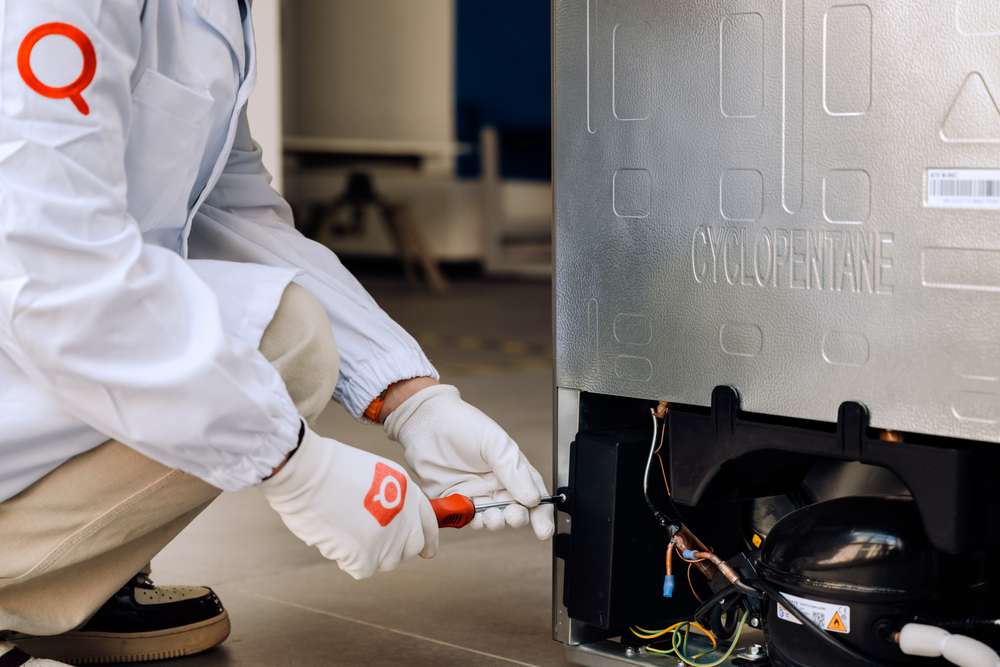
Consumer electronics testing verifies that products are safe, compliant, and perform reliably before entering the market. With an estimated 50% of EMC products failing upon the first test, it’s important to consider all testing requirements because each category protects against a different type of risk. Overlooking even one can prevent a product from entering the market, or worse, create safety, performance, or compliance failures after launch.
Testing typically falls into four areas:
Electrical and safety tests to prevent shock, fire, and overheating
EMC and wireless tests to ensure proper signal performance without interference
performance and durability tests to confirm functionality under real-world conditions
material and chemical compliance tests to meet regulations like RoHS, REACH, and Prop 65.
(Many products also undergo certification testing (e.g., CE, FCC, UL) to meet market-entry requirements).
Below is a table that includes the various types of tests broken down categorically:
| Category | Test Type | What It Evaluates | Example Standards / Requirements |
|---|---|---|---|
| Electrical & Safety Testing | High-Voltage / Dielectric Strength | Prevents electric shock & breakdown under high voltage | IEC 62368-1, UL/ANSI |
| Leakage Current | Measures unintended current flow | IEC 60990 | |
| Overheating / Thermal Safety | Assesses heat generation & fire risk | IEC 60695, UL standards | |
| Short-Circuit & Overload | Battery and circuit failure prevention | UL 2054, IEC 62133 | |
| Electromagnetic & Wireless Testing | EMC (Electromagnetic Compatibility) | Ensures device doesn’t disrupt other products | CISPR 32, IEC/EN 55032 |
| EMI Emissions Testing | Measures interference produced by device | FCC Part 15, EN 301 489 | |
| RF / Wireless Performance | Validates Bluetooth, Wi-Fi, cellular functionality | ETSI EN 300, FCC wireless | |
| Signal Immunity | Ensures device resists interference | IEC/EN 61000 series | |
| Performance & Reliability Testing | Functional Performance | Confirms device works as intended | IEC product-specific standards |
| Environmental Stress Testing | Heat, humidity, vibration, shock | IEC 60068 series | |
| Drop & Impact Testing | Durability under physical stress | ISTA transport tests | |
| Lifecycle / Endurance | Long-term reliability over time | ISO & IEC mechanical tests | |
| Material & Chemical Compliance | RoHS Substance Testing | Lead, cadmium, mercury limits | RoHS Directive (EU) |
| REACH SVHC Screening | Hazardous chemical disclosure | EU REACH | |
| Prop 65 Compliance | California chemical exposure labeling | CA Prop 65 | |
| Battery Chemical Analysis | Lithium composition, heavy metals | IEC 62133, UN 38.3 | |
| Packaging, Labeling & Documentation | Label Verification | CE, FCC, warnings, disposal icons | CE mark, WEEE, FCC |
| Instruction Manual Review | Safety statements & regulatory language | IEC 82079 | |
| Packaging Durability & Transit | Protection during shipping | ISTA 1A, ASTM D4169 | |
| Certification-Specific Testing | CE Marking (EU) | Safety, EMC, environmental directives | EN standards, RoHS |
| FCC Certification (U.S.) | Radio emissions & interference | FCC Part 15 | |
| CB Scheme | International mutual-recognition safety tests | IEC standards | |
| UL Certification | North American safety listing | UL/ANSI standards |
While each testing category is critical for safety and regulatory compliance, the sequence in which tests are conducted can have a major impact on cost and timelines. Partnering with an experienced third-party testing provider ensures that testing is prioritized and scheduled efficiently, helping streamline the process and accelerate time-to-market.
Finding A Testing Partner
QIMA offers comprehensive consumer products testing lab services and compliance programs for E&E products. With laboratories and teams positioned across major manufacturing regions, we support manufacturers in meeting stringent quality requirements and fulfilling regulatory obligations for electronic products in international markets.
We recognize that you have many testing providers to choose from, which is why we are committed to delivering superior service, technical expertise, and competitive turnaround times.
Explore our full suite of consumer electronics testing services or contact us to schedule an evaluation. With QIMA’s support and world-class consumer products, you can navigate complex compliance requirements with confidence, protect brand integrity, and ensure a safe, reliable product experience for end users.
FAQs
What types of tests are typically performed on consumer electronics?
Common tests include electrical and safety testing, EMC and wireless testing, performance and reliability testing, and material and chemical compliance testing. Many products also undergo certification-specific testing for marks such as CE, FCC, UL, or CB Scheme.
Do all markets require the same electronics tests?
No. Different regions have different regulatory frameworks and standards. For example, products sold in the EU may require CE marking and RoHS compliance, while those sold in the U.S. may need FCC and UL requirements. A testing expert can help map tests to your target markets.
When should consumer electronics testing be performed in the product lifecycle?
Testing should begin early in development, ideally at the prototype stage, and continue through pre-production and mass production. Early testing allows issues to be identified and corrected before large-scale manufacturing, saving time and cost.
Why should manufacturers use a third-party testing laboratory?
Accredited third-party laboratories provide impartial, recognized results and can advise on applicable standards, optimize test sequencing, and support certification and documentation. This helps manufacturers streamline their compliance strategy and accelerate time-to-market.
How long do electronics tests take?
Most textile tests take 3-10 business days, depending on test complexity and lab capacity.
How much does electronics lab tests cost?
Costs vary by test complexity, time, and test scope; compliance test panels are typically more expensive than basic quality tests.
Related Articles
An Overview of Testing Methods for Electronic Components - Learn more about the various testing methods associated with electronic components.
Navigating the Global Regulatory Landscape of Electronics Compliance - Discover tips on how to navigate the pitfalls of regulatory compliance for your electronics products.
Low Voltage Directive Compliance: Navigating Requirements and Compliance for Electrical Equipment - Read more about the scope, requirements, and steps to take for LVD compliance.
Related Articles